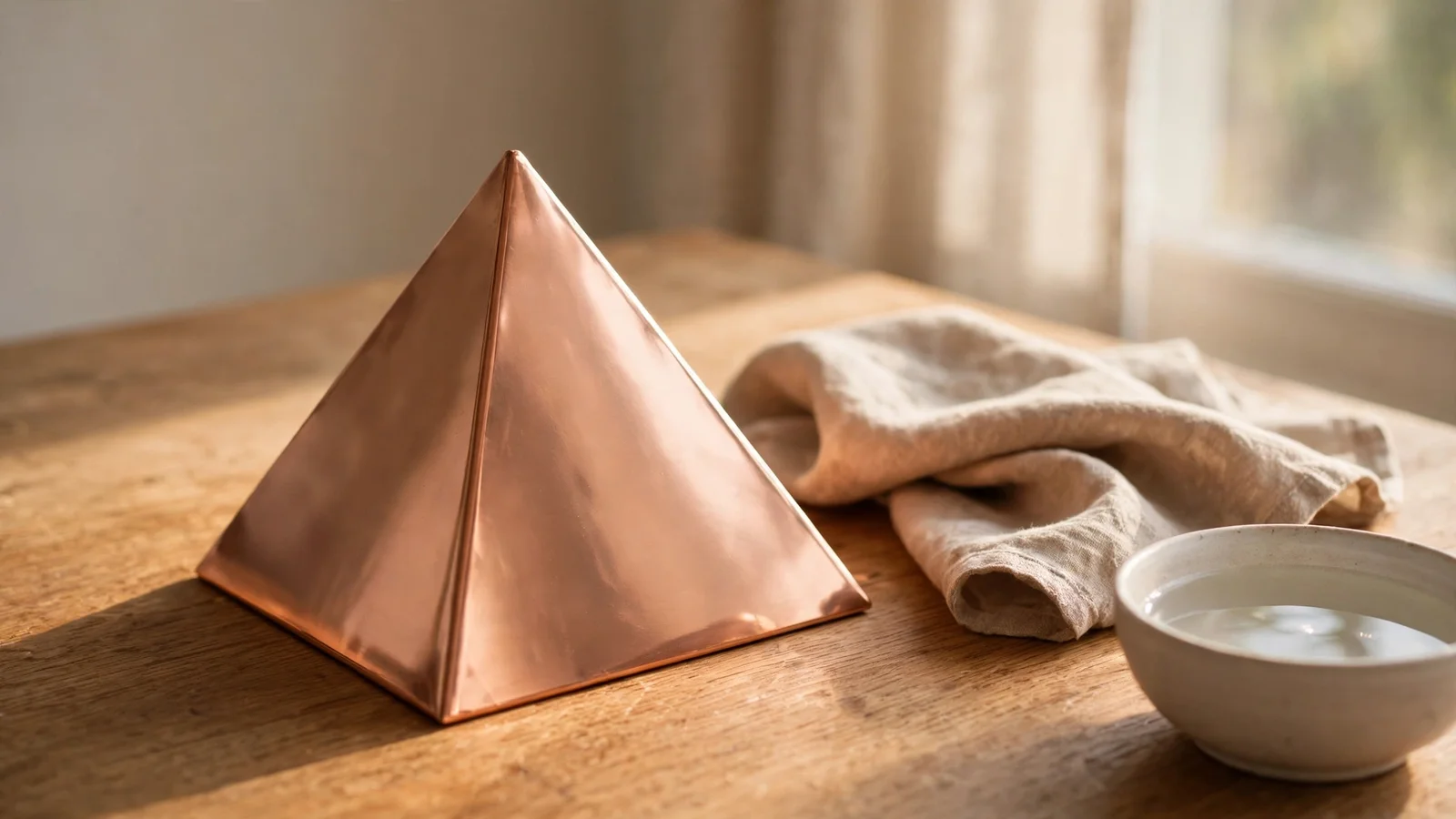
A copper pyramid is a lifetime object — but only if it is cared for like one. Copper is a living metal: it tarnishes, it fingerprints, it reacts to humidity and skin oils. None of that means your pyramid is damaged. With a simple routine, your copper pyramid can stay bright, energetically clean and structurally sound for decades. Here is the complete care guide: daily habits, safe cleaning methods, what never to do, and how to store it.
Why copper needs care
Copper is chosen for pyramids precisely because it is highly conductive — the same property that makes it responsive also makes it reactive. Exposed to air, moisture and skin oils, copper develops a dull brown layer and eventually a green patina (verdigris). This is chemistry, not damage, and it does not destroy the pyramid. But heavy tarnish dulls the appearance, traps dust in joints, and — for people who use their pyramid for meditation — can feel energetically "stale."
The good news: copper is one of the easiest metals to restore. Unlike plated metals, solid copper can be cleaned back to a bright shine again and again without wearing through a coating.
The everyday routine: dusting and handling
Most care is just habit. Dust your pyramid weekly with a dry, soft microfibre cloth — dust settles in the joints and along the base edges first. Handle it by the base or the edges rather than gripping the apex, since fingerprints are the fastest route to tarnish. If you meditate inside or under a large pyramid, keep it in one dedicated spot rather than moving it daily; every move is a chance to knock a joint out of alignment.
Keep the pyramid away from kitchens and bathrooms where possible: cooking grease and steam accelerate tarnishing dramatically. A dry living room, study or meditation corner is ideal.
How to clean a copper pyramid safely
For light tarnish, a soft cloth with a little warm water and mild soap is enough — wipe, then dry immediately and thoroughly. Copper left damp tarnishes faster than copper left dusty.
For heavier tarnish, the classic gentle method works beautifully: make a paste of equal parts lemon juice and fine salt (or white vinegar and salt), rub it gently over the copper with a soft cloth, leave it for a few minutes, then rinse with clean water and dry at once. For a no-scratch alternative, ketchup works surprisingly well — its mild acidity lifts tarnish without abrasion. Always finish by buffing with a dry microfibre cloth.
For large meditation pyramids with many joints, clean one section at a time and check the joints as you go — cleaning is also your inspection round.
| Tarnish level | Method | Key caution |
|---|---|---|
| Light tarnish | Soft cloth with a little warm water and mild soap | Dry immediately and thoroughly; copper left damp tarnishes faster than copper left dusty |
| Heavier tarnish | Paste of equal parts lemon juice and fine salt (or white vinegar and salt), rubbed gently, left a few minutes, rinsed | Dry at once; clean large pyramids one section at a time and check joints as you go |
| No-scratch alternative | Ketchup — its mild acidity lifts tarnish without abrasion | Finish by buffing with a dry microfibre cloth |
| Routine | Dust weekly with a dry, soft microfibre cloth | Deeper clean only when tarnish turns patchy or green — for most indoor pyramids, every few months, not every week |
What never to do to copper
Three things shorten a copper pyramid's life. Never use steel wool, scouring pads or abrasive powders — they scratch the surface, and scratches tarnish faster than smooth metal. Never soak a pyramid for hours in vinegar or acid; prolonged acid exposure pits the surface and weakens soldered or bolted joints. And never put it in a dishwasher: the heat, detergents and long wet cycle are the worst combination copper can face.
Also avoid commercial "miracle" metal polishes that leave waxy or lacquer-like coatings. They look good for a week, then trap tarnish underneath and are difficult to remove.
| Never do this | Why, per this guide |
|---|---|
| Steel wool, scouring pads or abrasive powders | They scratch the surface, and scratches tarnish faster than smooth metal |
| Soak for hours in vinegar or acid | Prolonged acid exposure pits the surface and weakens soldered or bolted joints |
| Put it in a dishwasher | Heat, detergents and the long wet cycle are the worst combination copper can face |
| Commercial “miracle” polishes that leave waxy or lacquer-like coatings | They look good for a week, then trap tarnish underneath and are difficult to remove |
| Store wrapped in newspaper | The ink transfers — wrap in a soft cotton cloth instead, somewhere dry with stable temperature |
Patina: when to keep it, when to clean it
Not all tarnish needs removing. A light, even patina is prized by many pyramid users — it gives the copper a warm, antique character and does nothing to harm the structure. The time to clean is when the tarnish becomes patchy, green and crusty (verdigris), or when dust and grime have built up in the joints. Green verdigris is mildly corrosive over long periods, so it should not be left indefinitely, especially on joints and connectors.
Think of it like this: even tone is character; crusty green is maintenance due.
Storage and longevity
If you need to store a pyramid, wrap it in a soft cotton cloth (not newspaper — the ink transfers) and keep it somewhere dry and stable in temperature. For collapsible pyramids, disassemble gently, keep the connectors together in a small pouch, and note the assembly order — a photo before disassembly saves confusion later.
With this routine — weekly dusting, cleaning when tarnish turns patchy, dry storage — a solid copper pyramid genuinely lasts a lifetime, and often becomes more beautiful with age. Check the joints once a year: a loose connector tightened early is a pyramid saved.
Copper pyramid care: frequently asked questions
How often should I clean my copper pyramid?
Dust it weekly with a dry microfibre cloth. A deeper clean is only needed when tarnish becomes patchy or green — for most indoor pyramids that means every few months, not every week.
Can I wash a copper pyramid with water?
Yes, briefly: warm water with a little mild soap, wiped on and dried immediately and thoroughly. Never leave copper damp or soak it for hours — moisture left on the surface speeds up tarnishing.
What is the safest way to remove tarnish from copper?
A paste of equal parts lemon juice and fine salt (or white vinegar and salt), rubbed gently with a soft cloth, rinsed, and dried at once. Ketchup is a good no-scratch alternative. Avoid steel wool, scouring pads and abrasive powders.
Is green patina on copper bad?
A light, even patina is harmless and often prized for its antique look. Crusty green verdigris, however, is mildly corrosive over time and should be cleaned off, especially from joints and connectors.
Can a copper pyramid rust?
Copper does not rust like iron — it tarnishes and develops patina instead. Rust (iron oxide) only appears if the pyramid has iron or steel fittings, in which case keep those fittings dry and clean them separately.
How should I store a copper pyramid?
Wrap it in a soft cotton cloth, keep it somewhere dry with stable temperature, and avoid newspaper (ink transfers). For collapsible pyramids, keep connectors together in a pouch and photograph the assembly before taking it apart.
Care is part of the practice
A copper pyramid asks very little: a weekly wipe, an occasional gentle clean, a dry spot to live in. In return it stays bright, sound and ready for decades. If you are choosing your first pyramid or wondering about placement, our guide to choosing a meditation pyramid and sleeping under a pyramid cover the next steps — or ask us directly for advice on your setup.
Get new readings in your inbox
One short email when a new angel-number guide or calculator goes live. No spam, ever.
Setting up your first pyramid?
Get personal guidance on choosing, placing and caring for a pyramid that fits your space and practice.
Book a Consultation