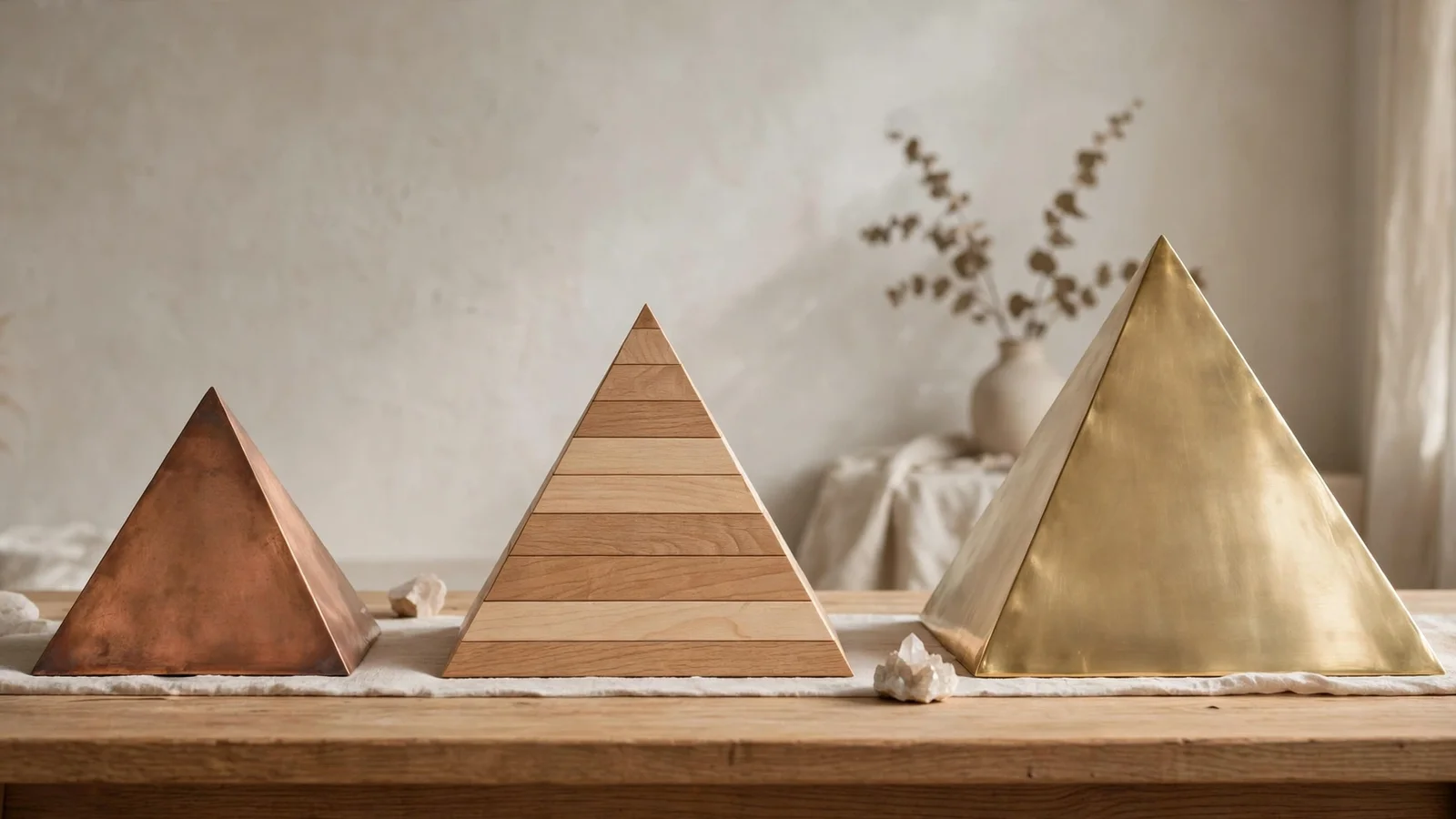
Ready to try pyramid practice but staring at a dozen options? Copper or wood? What size? Where does it go? Choosing a meditation pyramid is simpler than the market makes it look. Here's a practical guide to materials, sizes, proportions, and placement — so you buy (or build) once, and buy right.
Material: copper, brass, or wood?
Copper is the traditional favourite. Believers consider it the best conductor of subtle energy; practically, it's durable, reasonably priced, and develops a beautiful patina. Most walk-in meditation pyramids you'll find are copper pipe frames.
Brass is a close second — slightly warmer in feel and appearance, a bit pricier. Wood is gentler and quieter visually, favoured by sensitive practitioners and for indoor spaces where metal feels too "active." Avoid plastic or thin novelty pyramids if you want a genuine practice tool — geometry and sturdiness matter more than branding.
| Material | Traditional feel | Practical note from this guide |
|---|---|---|
| Copper | Best conductor of subtle energy; traditional favourite | Durable, reasonably priced, develops a patina; most walk-in frames are copper pipe |
| Brass | Close second | Slightly warmer in feel and appearance, a bit pricier |
| Wood | Gentler and quieter visually | Favoured by sensitive practitioners and where metal feels too “active” |
| Plastic / thin novelty | Not recommended | Avoid if you want a genuine practice tool — geometry and sturdiness matter more than branding |
Size: match it to your use
- Sitting meditation (one person): 4×4 to 5×5 ft base.
- Two people or lying down: 6×6 to 7×7 ft base.
- Sleeping under: 7×7 to 9×9 ft, sized to your bed (see our pyramid sleep guide).
- Desk / energy piece: 1–2 ft — decorative and for focused work nearby.
Bigger is not automatically better. Choose the smallest size that fits your intended use — it will be sturdier, cheaper, and easier to place.
| Use | Base size | Note |
|---|---|---|
| Sitting meditation, one person | 4 × 4 to 5 × 5 ft | |
| Two people or lying down | 6 × 6 to 7 × 7 ft | |
| Sleeping under | 7 × 7 to 9 × 9 ft | Sized to your bed |
| Desk / energy piece | 1–2 ft | Decorative and for focused work nearby |
| General rule | Smallest size that fits the use | Bigger is not automatically better; smaller is sturdier, cheaper and easier to place |
Proportions: the Giza angles
Traditional practice copies the Great Pyramid of Giza: base edges at about 51.8 degrees, apex height roughly 0.63 × the base width. Believers say these specific angles create the focusing effect; practically, correct proportions also just look and feel right, while squat or spiky pyramids feel off. When buying, check the seller states Giza proportions — reputable makers do.
Placement and alignment
Put your pyramid somewhere quiet and uncluttered where you won't be disturbed — a bedroom corner, a meditation room, a garden spot. Tradition says align one face toward true north (use a compass app, not magnetic guesswork). Keep electronics and clutter out from under it, and arrange your seat so your head sits near the one-third height point — the King's Chamber position.
DIY or buy?
Many practitioners build their own from copper pipes and corner connectors — affordable, and you control the proportions exactly. You need four equal base edges and four equal sloping edges meeting at the apex, kept rigid. If you'd rather buy, expect small copper pyramids to be very affordable and walk-in frames to run into the low hundreds depending on craftsmanship. Be wary of extremely cheap options with wrong proportions.
Choosing a meditation pyramid: frequently asked questions
What is the best material for a meditation pyramid?
Copper is the traditional favourite — believers consider it the best conductor of subtle energy, and it is durable and affordable. Brass is a close second with a warmer feel; wood is gentler and good for sensitive practitioners. Avoid plastic or thin novelty pyramids if you want the real practice.
What size meditation pyramid do I need?
For sitting meditation, a base of 4×4 to 5×5 feet comfortably fits one seated person. For two people or lying down, go 6×6 to 7×7 feet. For sleeping under, 7×7 to 9×9 feet depending on bed size. Choose the smallest size that fits your intended use.
Do pyramid proportions really matter?
In traditional practice, yes: most meditation pyramids copy the Great Pyramid of Giza's proportions (base angle about 51.8 degrees, height roughly 0.63 times the base width). Believers say these angles create the focusing effect. Practically, proper proportions also just look and feel right.
Where should I place my meditation pyramid?
Choose a quiet, uncluttered spot where you will not be disturbed. Align one face toward true north per tradition, keep electronics and clutter out from under it, and sit with your head near the one-third height point.
How much does a good meditation pyramid cost?
Small copper pyramids (1–2 ft) start very affordable; walk-in copper frames (5–7 ft base) typically run into the low hundreds of dollars depending on craftsmanship. Wooden ones cost less, brass more. Be wary of extremely cheap options with wrong proportions.
Can I make my own meditation pyramid?
Yes — many practitioners build their own from copper pipes and corner connectors. You need four equal base edges, four equal sloping edges meeting at the apex, and rigid joints. The key measurements are equal edges and the 51.8-degree slope.
Get it right the first time
The wrong size or a wobbly frame gathers dust; the right one becomes a daily sanctuary. If you'd like help choosing proportions, materials, and placement for your space and practice, a consultation can sort it in one session. You can reach out here to begin.
Get new readings in your inbox
One short email when a new guide or calculator goes live. No spam, ever.
Choosing your pyramid?
Get personal guidance on size, material, and placement for your space and practice.
Book a Consultation