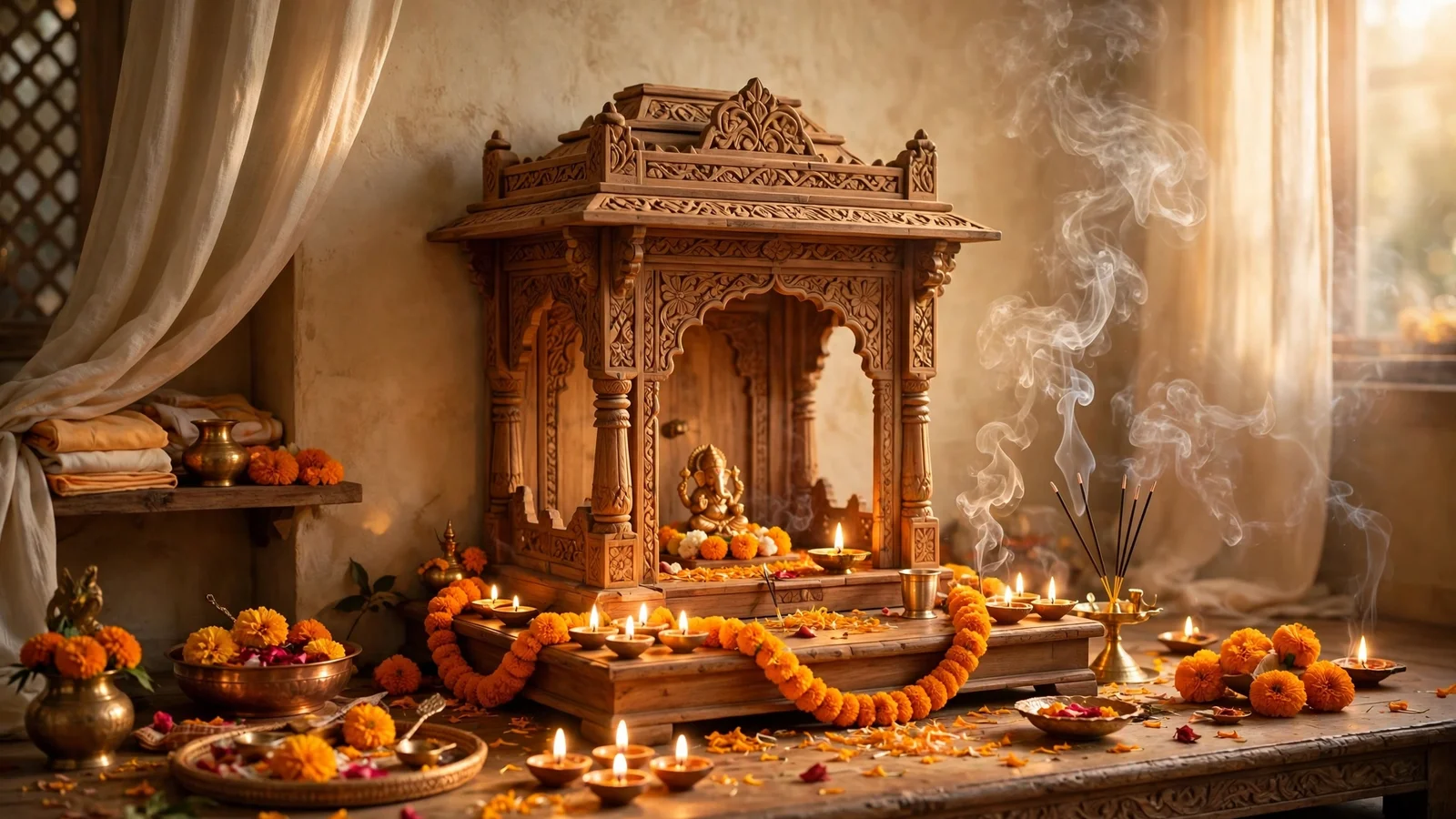
The pooja room is the spiritual heart of a Hindu home — the one space set apart for devotion, stillness, and gratitude. Vastu Shastra gives it special attention: its direction, the mandir's placement, which way idols face, and even its colours all shape the quality of the sacred space. Here's the complete guide to a Vastu-aligned pooja room.
Best direction for the pooja room
The northeast is the ideal pooja room direction — the most sacred zone of the home (Ishan), associated with spiritual energy, clarity, and divine connection. East and north are the next best choices. Avoid the south, southwest, and basement for the pooja space, and never place the mandir under a staircase or against a bathroom wall.
| Zone | Verdict | Note |
|---|---|---|
| Northeast | Ideal | Most sacred zone (Ishan): spiritual energy, clarity, divine connection |
| East | Next best | |
| North | Next best | |
| South, southwest, basement | Avoid | |
| Never | Never under a staircase or against a bathroom wall | |
| No spare room? | A dedicated wall-mounted mandir or clean, curtained alcove in the northeast, east or north of the living room works | What matters is a distinct, respected, clean space, not square footage |
Mandir placement and idol facing
- Idols face west or south — so that you face east or north while praying. East-facing prayer is considered most auspicious.
- Keep idols slightly away from the wall, never touching it, at a respectful height — ideally eye level when seated.
- The mandir itself should be elevated — on a platform or pedestal, never directly on the floor.
- Ensure the space allows you to sit comfortably with your head uncovered to the room — no low beams pressing above the prayer seat.
Colours and light
Choose light, serene tones: whites, creams, light yellows, soft oranges, light blues — colours of purity and calm. Keep the space well-lit; a diya or lamp lit daily is traditional and psychologically powerful — the small flame marks the space as sacred every single day. Avoid dark colours, especially black and dark red, in the pooja room.
What to keep — and what to avoid
Keep: idols or images, diyas/lamps, incense, fresh flowers, a small Kalash with water, sacred texts. Everything clean, ordered, and maintained — only pooja-related items belong here.
Avoid: broken idols or torn images (traditionally immersed respectfully, not kept), photographs of departed ancestors alongside deities, clutter or storage of household items, dust and cobwebs, and using the space for anything but worship.
| Keep | Avoid |
|---|---|
| Idols or images | Broken idols or torn images (traditionally immersed respectfully, not kept) |
| Diyas / lamps, incense, fresh flowers | Photographs of departed ancestors alongside deities |
| A small Kalash with water, sacred texts | Clutter or storage of household items, dust and cobwebs |
| Everything clean, ordered and maintained; only pooja-related items | Using the space for anything but worship |
| Mandir elevated on a platform or pedestal, never directly on the floor; idols slightly away from the wall, at eye level when seated | Dark colours, especially black and dark red |
No room for a pooja room?
Most urban homes don't have a spare room — and that's fine. A dedicated wall-mounted mandir or a clean, curtained alcove in the northeast, east, or north part of the living room works beautifully. What matters is a distinct, respected, clean space — elevated, well-lit, used only for worship — not its square footage. Devotion, not dimensions, makes it sacred.
Vastu pooja room: frequently asked questions
Which direction is best for the pooja room as per Vastu?
The northeast is ideal — the most sacred zone of the home, associated with spiritual energy and clarity. East and north are the next best choices. Avoid the south, southwest, and basement.
Which direction should idols face in the pooja room?
Idols should face west or south, so the worshipper faces east or north while praying. Keep idols slightly away from the wall at eye level when seated.
What colours are good for the pooja room?
Light, serene tones: whites, creams, light yellows, soft oranges, light blues. Avoid dark colours — especially black and dark red.
What should be kept in the pooja room?
Idols or images, diyas or lamps, incense, fresh flowers, a small Kalash with water, and sacred texts — only pooja-related items, all clean and well-maintained.
What should be avoided in the pooja room?
Broken idols, photographs of the deceased alongside deities, clutter, non-pooja storage, dust, and placement under a staircase or beside a bathroom wall.
What if there is no space for a separate pooja room?
A dedicated wall-mounted mandir or curtained alcove in the northeast, east, or north works beautifully. What matters is a distinct, respected, clean space — elevated, well-lit, used only for worship.
Bless your home's heart
A well-placed pooja room uplifts the entire household — it's the one room whose energy everyone feels. For guidance on placing or improving your sacred space, a Vastu consultation can help. You can reach out here to begin.
Get new readings in your inbox
One short email when a new guide or calculator goes live. No spam, ever.
Bless your home's heart
Get guidance on placing or improving your pooja room as per Vastu.
Book a Consultation