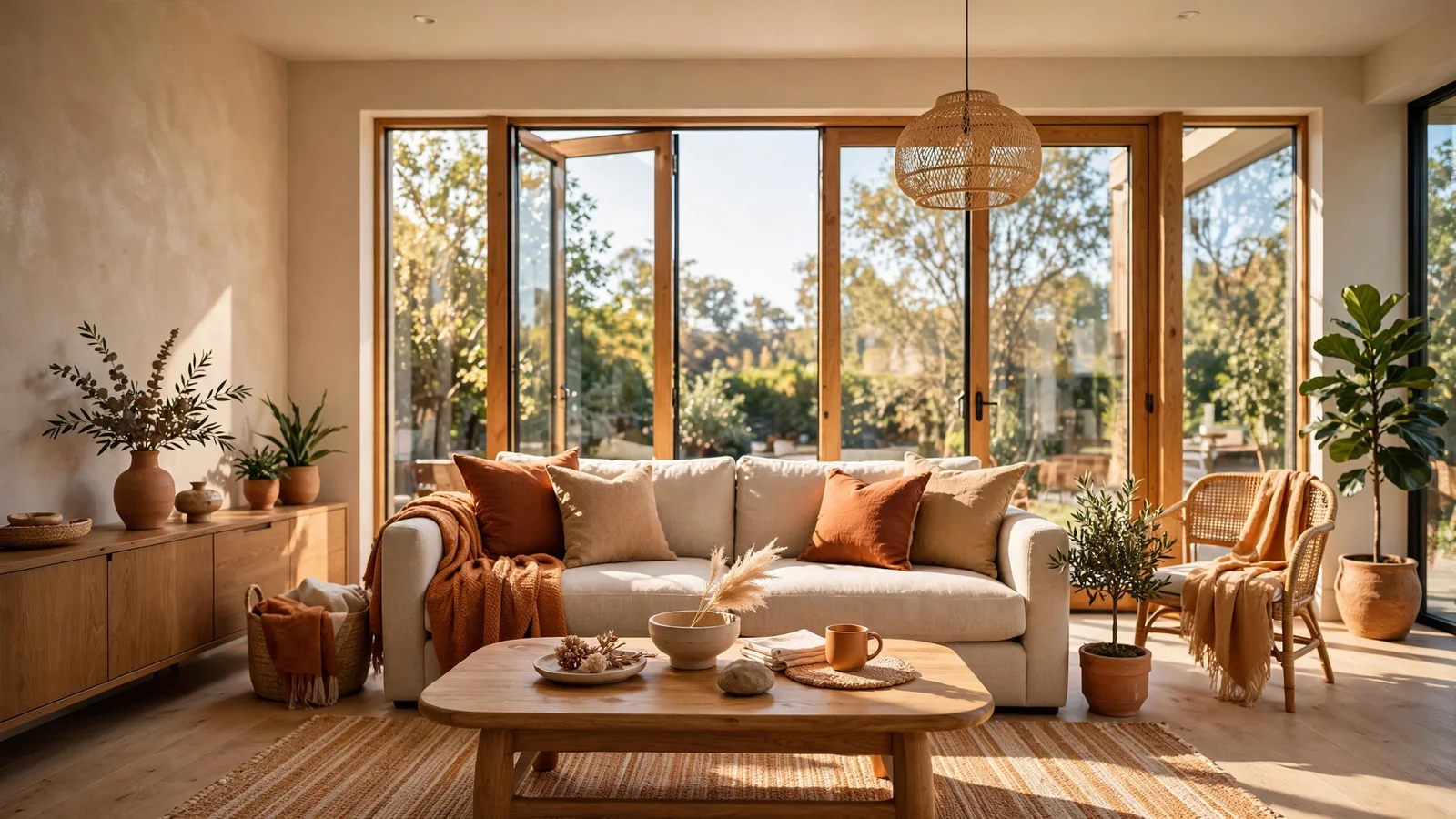
The living room is where your home meets the world — guests are received, families gather, and the first impression of your house is formed. In Vastu Shastra, this social heart of the home deserves careful placement: the right direction, seating arrangement, and colours are said to invite warmth, harmony, and positive energy. The good news is that most living rooms can be brought into Vastu alignment without moving walls or demolishing anything. Here's how.
Ideal living room direction per Vastu
The north, northeast, and east zones are considered the best directions for a living room. These zones receive gentle morning light, which Vastu associates with freshness and clarity, and they sit in the part of the house linked to social warmth and new opportunities. A living room in the north or northeast is traditionally believed to support lively conversation and a welcoming atmosphere.
The direction to avoid is the southwest — Vastu reserves this zone for heavy, stable, private uses like the master bedroom, and a public room here is considered energetically mismatched. The northwest and southeast are considered acceptable for a living room, though not ideal. If your living room already sits in the southwest, don't panic: the remedies section below covers what to do.
| Zone | Verdict | Note |
|---|---|---|
| North, northeast, east | Best | Gentle morning light; linked to social warmth and new opportunities |
| Northwest, southeast | Acceptable, though not ideal | |
| Southwest | Avoid | Reserved for heavy, stable, private uses like the master bedroom; a public room here is considered energetically mismatched |
Seating arrangement: face east or north
The core Vastu rule for seating is simple: place the main sofa against the south or west wall, so that family members and guests face east or north while sitting. Facing east is traditionally linked to clarity, alertness, and good conversation; facing north is linked to prosperity and receptivity.
A few practical points follow from this:
Keep the northeast corner light and open. This is one of the most consistent Vastu principles across the whole house — the northeast should not carry heavy furniture, tall cabinets, or clutter. A small plant or a lamp is fine; a bulky bookshelf is not.
Heavy furniture belongs in the south and west. Large sofas, wooden cabinets, and the entertainment unit sit most comfortably along the south or west walls, which Vastu treats as the stable, weight-bearing sides of a room.
Don't block the entrance path. The main door of the living room should open freely, and the path from it into the seating area should be clear. A sofa directly facing the door with an open approach is welcoming; furniture that forces guests to squeeze past a corner is not.
| Element | Guidance |
|---|---|
| Main sofa | Against the south or west wall, so sitters face east or north — east for clarity and good conversation, north for prosperity |
| Northeast corner | Keep light and open: no heavy furniture, tall cabinets or clutter; a small plant or lamp is fine |
| Heavy furniture | South and west walls: large sofas, wooden cabinets, entertainment unit |
| Entrance path | Don’t block it; the main door should open freely and the path into the seating area should be clear |
| TV / electronics | Southeast side (the fire / agni zone); viewers face north or east; avoid heavy electronics in the northeast |
| Mirrors | North or east walls; avoid directly opposite the main door, where incoming energy is said to bounce back out |
| Plants | Money plant (north or east side), bamboo, peace lily, areca palm; skip thorny cactus indoors and dried or artificial flowers |
TV, electronics, and other furniture placement
Vastu assigns electrical equipment to the southeast — the fire (agni) zone. So the television, music system, and similar electronics are traditionally best placed on the southeast side of the living room, with viewers facing north or east while watching. This often works out naturally with the seating layout above.
Avoid placing heavy electronics in the northeast corner. Air conditioners are generally fine on the west or north walls. Mirrors and glass elements are treated separately (see below), but the general principle is: fire-zone items in the southeast, water-zone items (aquariums, if you keep one) in the north or northeast.
Colours, lighting, and ventilation
Colour sets the emotional tone of the room, and Vastu favours light, warm tones for living rooms: cream, beige, off-white, light yellow, and soft peach. These shades reflect natural light, make the room feel larger, and create the welcoming warmth a social space needs. You can add richer accent colours — a terracotta throw, olive-green cushions — without breaking the principle, as long as the dominant palette stays light.
What to avoid: heavy dark reds, blacks, and deep greys across large wall areas. Tradition holds that dark, heavy colours weigh down the room's energy and can make social spaces feel tense or gloomy. A charcoal accent chair is fine; four charcoal walls are not the Vastu recommendation.
Lighting and ventilation matter as much as colour. A Vastu-friendly living room is bright and airy — maximise natural daylight, use warm-white artificial lighting in the evenings, and let fresh air circulate daily. A dark, stuffy room fails the Vastu test regardless of where the sofa sits.
Plants, mirrors, decor, and artwork
Leafy, upward-growing plants are the Vastu favourite for living rooms. The money plant is the classic recommendation — traditionally placed on the north or east side of the room, and believed to support growth and prosperity. Bamboo, peace lily, and areca palm are also considered positive choices. What to skip indoors: thorny plants like cactus, which tradition reads as sharp, conflicting energy, and dried or artificial flowers, which are considered stagnant.
Mirrors belong on the north or east walls, where they symbolically expand the space and reflect light inward. Avoid placing a mirror directly opposite the main door, where it is said to bounce incoming energy straight back out. Keep mirrors clean and uncracked.
For artwork, choose images that feel uplifting — landscapes, sunrise scenes, flowing water, family photographs. Vastu tradition suggests avoiding artwork depicting war, sorrow, wild animals in attack poses, or lonely, desolate scenes in the main social space of the home.
Remedies for a wrong-direction living room
If your living room sits in the southwest or another less-ideal zone, Vastu offers remedies that require no demolition. The most commonly recommended ones:
Light it up. Keep the room bright — good daylight by day, warm lighting by night. A dark southwest room is the worst combination; a bright one is far less of an issue.
Use light, warm colours on the walls and upholstery, as described above, to counterbalance the heaviness of the zone.
Keep the northeast corner of the room open and clutter-free, even if the room itself is in the southwest of the house — the principle applies room by room.
Place a Vastu pyramid or a bowl of sea salt in the room; both are traditional energy-balancing tools. Replace the salt every week or two.
Hang a mirror on the north or east wall to symbolically open up the space and draw in light.
These remedies won't relocate the room, but they address the practical concerns behind the rule: a bright, light, well-arranged southwest living room works far better than a dark, cluttered "correct" one.
Vastu living room: frequently asked questions
What is the best direction for a living room as per Vastu?
The north, northeast, and east zones are considered the best directions for a living room in Vastu Shastra. These zones receive gentle morning light and are associated with social warmth and positive energy flow. The southwest is traditionally the zone to avoid, since it is reserved for heavy, stable uses like the master bedroom.
Which direction should the sofa face in a Vastu living room?
Place the main sofa against the south or west wall, so the people seated on it face east or north. Facing east is traditionally linked to clarity and good conversation, and facing north to prosperity. Keep the northeast corner of the room light, open, and uncluttered.
Where should the TV be placed in the living room?
Vastu places the television and other electronics in the southeast zone of the living room — the fire (agni) zone associated with electrical equipment. Viewers then face north or east while watching. Avoid placing heavy electronics in the northeast corner.
Which colours are best for a living room as per Vastu?
Light, warm tones work best: cream, beige, off-white, light yellow, and soft peach. These shades reflect light and keep the room feeling open and welcoming. Vastu advises against heavy, dark colours in large areas — particularly black, dark red, and deep grey on walls.
Which plants are good for the living room according to Vastu?
Leafy, upward-growing plants are favoured — the money plant is the classic Vastu choice for the north or east side of the room. Bamboo, peace lily, and areca palm are also considered positive. Avoid thorny plants like cactus indoors, and skip dried or artificial flowers.
What are the remedies if my living room is in the wrong direction?
No demolition is needed. Keep the room bright and well-ventilated, use light warm colours, keep the northeast corner open and clutter-free, place a Vastu pyramid or sea-salt bowl in the room, and hang a mirror on the north or east wall. A Vastu consultation can suggest remedies tuned to your specific floor plan.
When general Vastu guidance isn't enough
Every floor plan is different — room proportions, door positions, and the overall layout of the house all interact. If your living room has an awkward shape, sits in the southwest, or just never feels right despite your best efforts, a personal Vastu consultation can read your specific plan and suggest targeted remedies. You can reach out here to begin.
Get new readings in your inbox
One short email when a new angel-number guide or calculator goes live. No spam, ever.
Your living room not sitting right?
Get a personalised Vastu reading of your floor plan — room directions, furniture placement, and simple remedies that need no demolition.
Book a Consultation