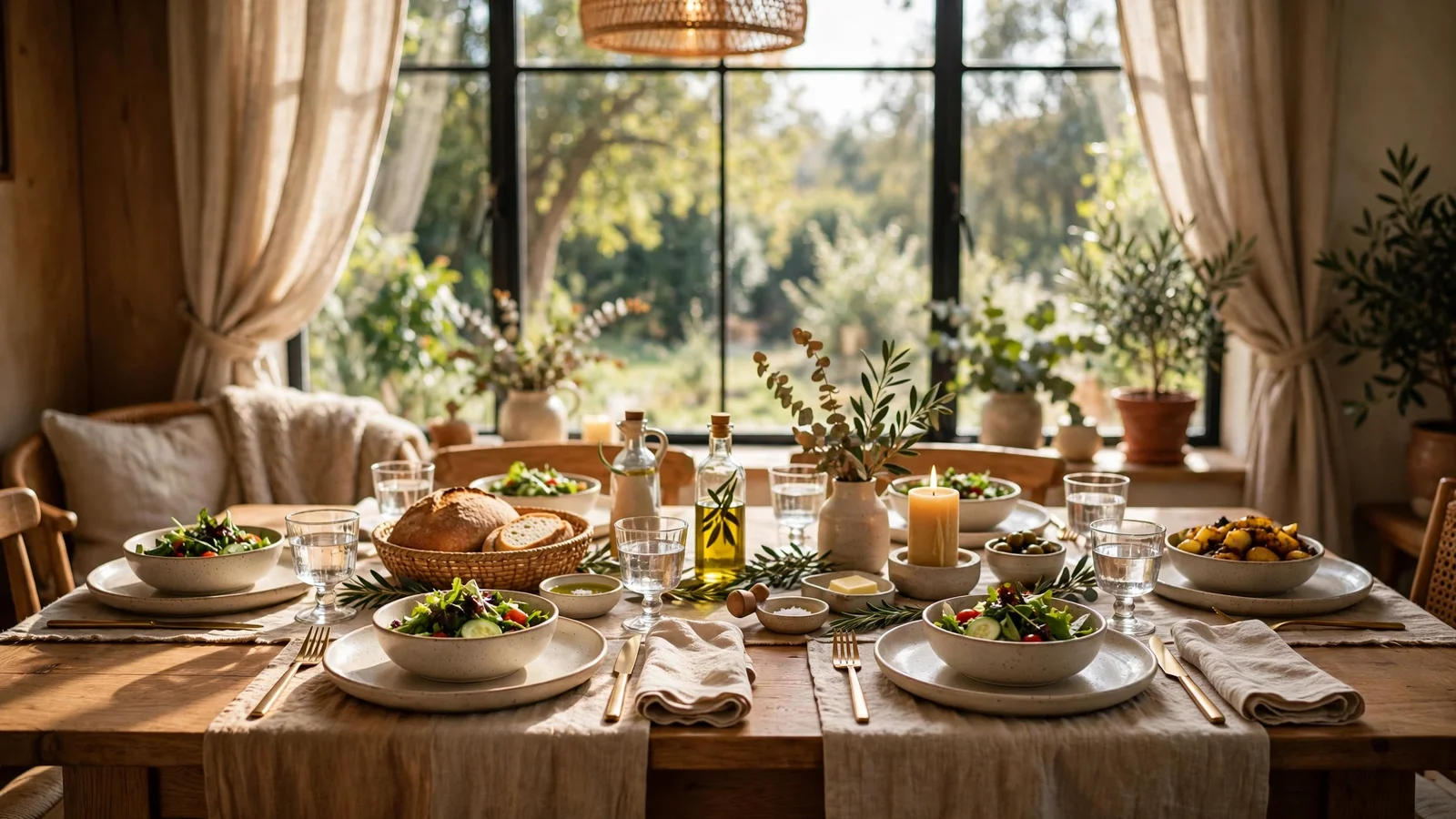
Food is more than fuel — in Indian tradition, the shared meal is a daily ritual of togetherness, gratitude, and nourishment. Vastu Shastra gives the dining room its own set of guidelines: where it should sit in the house, what shape the table should be, which way to face while eating, and even which colours make food taste better (or at least feel better). Like the rest of Vastu, the goal isn't superstition — it's a calm, orderly space where the family actually enjoys sitting together. Here's the full guide. If you searched specifically for dining table placement as per Vastu, the table section below has the full placement rules.
Ideal dining room direction per Vastu
The west is considered the best direction for a dining room in Vastu Shastra. The east and north are also considered acceptable zones. The underlying idea is practical as well as traditional: the dining room should sit close to the kitchen, and in the classic Vastu house plan the kitchen sits in the southeast (the fire zone), making a dining room to its west or east the natural arrangement.
Two placement notes come up often. First, the dining room should ideally be adjacent to the kitchen, so food travels a short, clean path from stove to table. Second, some Vastu schools advise against placing the dining area directly above or below the kitchen (in multi-storey homes), though this is a secondary concern and far from universal. If your dining room is elsewhere — a dining nook in the living room, for instance — the table and seating rules below matter more than the compass direction.
| Zone | Verdict | Note |
|---|---|---|
| West | Best | |
| East | Acceptable | |
| North | Acceptable | |
| Kitchen connection | Ideally adjacent to the kitchen, to its west or east, so food travels a short, clean path from stove to table | Some schools advise against placing the dining area directly above or below the kitchen — a secondary concern, far from universal |
Dining table shape, material, and placement
The Vastu recommendation for the dining table is straightforward: a square or rectangular wooden table. Regular, stable shapes seat everyone comfortably and symbolise steadiness; wood is the preferred material for its warmth and natural feel. The table should be sturdy and level — a wobbly or damaged table is considered inauspicious in tradition, and unpleasant in practice.
Avoid irregular shapes and sharp triangular corners. Round tables are generally acceptable in modern Vastu practice — they encourage conversation and have no sharp edges — as long as they are solid and well-proportioned to the room. Glass-top tables are fine, but tradition prefers the table to feel grounded and substantial rather than fragile.
Place the table so there is comfortable walking space on all sides, and never directly under a beam or directly in front of the bathroom or toilet door. The table should not touch the wall on the side where people sit — diners need their own space. That is the core of dining table placement as per Vastu: space on all sides, no beam overhead, no toilet door in front, and the room itself sitting to the west or east of the kitchen.
| Rule | Guidance |
|---|---|
| Shape and material | Square or rectangular wooden table is the traditional recommendation; regular, stable shapes symbolise steadiness |
| Round tables | Generally acceptable in modern Vastu practice — they encourage conversation and have no sharp edges — as long as solid and well-proportioned |
| Avoid | Irregular shapes, sharp triangular corners, and wobbly or damaged tables |
| Space | Comfortable walking space on all sides; the table should not touch the wall on the side where people sit |
| Never | Never directly under a beam, and never directly in front of the bathroom or toilet door |
| Seating direction | Face east while eating (most auspicious) or north (second preference); chairs on the west and south sides; head of the family traditionally faces east |
| Storage / wash area | Crockery in closed cabinets on the south or west side; washbasin in the north or east portion of the space |
Seating direction while eating
This is one of the most-quoted Vastu rules for dining: facing east while eating is traditionally considered the most auspicious, with facing north as the second preference. In practice, this means placing chairs on the west and south sides of the table so that diners face east or north.
The head of the family traditionally sits facing east. Children and other family members can take the remaining seats. If your room layout makes the ideal arrangement awkward, don't force it — facing the table's centre in a calm, unhurried meal matters more than the compass reading. Vastu is a guide for harmony, not a source of mealtime stress.
Colours, lighting, and the mood at the table
Colour psychology and Vastu agree on this one: warm, appetizing tones belong in the dining room. Peach, light orange, cream, and soft yellow are the classic recommendations — colours traditionally associated with appetite, warmth, and happy family meals. A fruit bowl or fresh flowers on the table adds living colour that needs no paint.
Avoid dark, brooding colours across large wall areas — black, dark grey, deep blue — which tradition says can dull the mood and even the appetite at the table. As with the living room, small dark accents are fine; the dominant palette should stay warm and light.
Lighting should be warm and focused on the table — a pendant light or chandelier above the dining table is both good design and good Vastu. Natural daylight is ideal for daytime meals. Keep the room well-ventilated and free of stale cooking smells; an exhaust or open window near the kitchen side helps.
Crockery storage, wash area, and the kitchen connection
The dining room's supporting cast matters too. Crockery and serving ware are traditionally stored in the south or west side of the dining area — the heavy, stable zones — in closed cabinets rather than open, dusty shelves. Keep everyday dishes accessible and special-occasion pieces protected.
The wash area or washbasin serving the dining room is best placed in the north or east portion of the space, since these are the water-friendly zones. In modern homes the basin often sits just outside the dining room; the same principle applies — north or east of the dining space is preferred.
One more traditional note: the dining room should be clearly separated from the pooja (prayer) room. The two spaces serve very different purposes, and Vastu treats the prayer room as a quiet, sacred zone that shouldn't double as a thoroughfare to the table.
Simple remedies for any dining room
Most dining rooms don't need major changes — Vastu's dining remedies are refreshingly simple:
Keep it clutter-free. A clear table is the single most repeated Vastu rule for this space. Don't let the dining table become a dumping ground for keys, mail, and school bags — eat at a clean table.
Fresh flowers or a fruit bowl on the table. Living, fresh items are considered to carry positive, active energy; remove wilted flowers promptly.
A small bowl of sea salt in a corner of the room is a traditional remedy said to absorb negativity. Replace the salt every week or two.
Warm lighting and fresh air daily — open the windows, let the room breathe, and use warm-white light in the evening.
Fix what's broken. A wobbly table, a flickering tube light, a chipped serving dish — tradition reads neglected repairs as stagnant energy. Fixing them is good Vastu and good housekeeping.
Vastu dining room: frequently asked questions
What is the best direction for a dining room as per Vastu?
The west is considered the best direction for a dining room in Vastu Shastra, with the east and north also considered acceptable. Placing the dining room adjacent to the kitchen, ideally to its west or east side, is preferred. Some schools advise against placing the dining area directly above or below the kitchen.
Which shape of dining table is best as per Vastu?
A square or rectangular wooden dining table is the traditional Vastu recommendation — regular, stable shapes that seat everyone comfortably. Irregular shapes, sharp triangular corners, and wobbly or damaged tables are considered inauspicious. Round tables are generally acceptable, as long as they are sturdy and well-proportioned.
Which direction should you face while eating?
Traditionally, facing east while eating is considered the most auspicious, and facing north is the second preference. In practice, arrange chairs on the west and south sides of the table so diners face east or north. The head of the family traditionally sits facing east.
Which colours are best for a dining room as per Vastu?
Warm, appetizing tones work best: peach, light orange, cream, and soft yellow. These colours are traditionally associated with appetite, warmth, and happy family meals. Avoid dark, brooding colours like black, dark grey, or deep blue across large wall areas.
Should the dining room be next to the kitchen in Vastu?
Yes — placing the dining room adjacent to the kitchen is the preferred Vastu arrangement, so that food travels a short, clean path from stove to table. The dining area can sit to the west or east of the kitchen. If the kitchen is in the southeast fire zone, a dining room just west of it works well.
What is the dining table placement as per Vastu?
Dining table placement as per Vastu means: a sturdy, level table with comfortable walking space on all sides, never directly under a beam and never directly in front of a bathroom or toilet door, with no wall touching the side where people sit. The dining room itself should sit to the west or east of the kitchen, and diners should face east or north while eating. The room direction and the table placement go together — get both right and the space feels settled.
What are simple Vastu remedies for a dining room?
Keep the dining table and the room clutter-free, place fresh flowers or a fruit bowl on the table, keep a small bowl of sea salt in a corner, and use warm lighting. Fix wobbly tables and broken fixtures promptly. A Vastu consultation can suggest remedies tuned to your specific layout.
When general Vastu guidance isn't enough
Open-plan layouts, dining nooks inside living rooms, and multi-storey homes all raise questions the general rules can't fully answer. If your dining space has an unusual shape or placement — or meals there just never feel settled — a personal Vastu consultation can read your specific floor plan and suggest targeted, no-demolition remedies. You can reach out here to begin.
Get new readings in your inbox
One short email when a new angel-number guide or calculator goes live. No spam, ever.
Your dining space not feeling settled?
Get a personalised Vastu reading of your floor plan — room directions, table placement, and simple remedies that need no demolition.
Book a Consultation